

Maria is a cycle of video art icons in progress — moving images of the Most Holy Virgin, built from footage rather than pigment. Each work holds the canonical silhouette of a known icon and fills it with fire, metal and light that never stop moving.
It is the first project Alexander Kuiava has made for a gallery wall rather than for a stage, a facade or a client. The cycle is being prepared for a debut exposition in Austria — most probably in Vienna — as his first exhibition as a media artist.
Role & Scope
- Concept & art direction
- Texture footage & cinematography
- 2D animation & compositing
- Masking & pattern design
- Exhibition preparation
Status
- In development
- A full cycle of Marian video art icons
- Looping works of 10 to 30 seconds
- Debut exposition planned in Austria
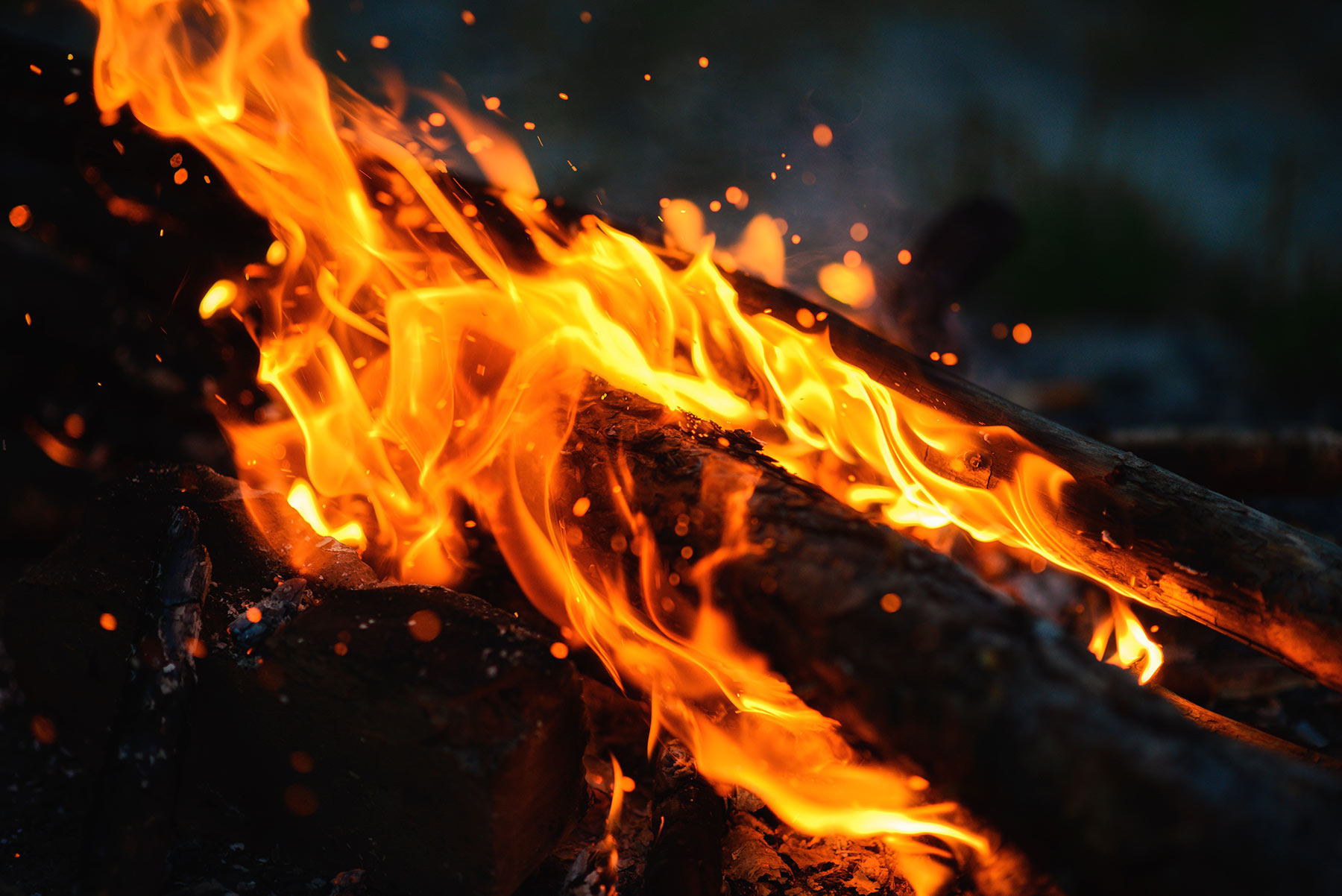
The motto
“Igne Natura Renovatur Integra — nature is wholly renewed by fire.”
An icon that does not stand still
An icon is a fixed form. Its proportions, gestures and colours are inherited, not invented, and that constancy is the point — a viewer recognises the image before reading it. Maria keeps every one of those inherited forms and changes only one thing: the surface no longer holds still.
Inside the outline of each known image, video moves. Flame rises through the robe, metal ripples where gold leaf would be, light passes across the figure and returns. The silhouette stays canonical; the material inside it behaves like weather. What the eye recognises as an icon, it also sees breathing.
That tension is the whole project. These are video art icons rather than animated illustrations — the movement is not narrative and nothing is told. Each work simply refuses to settle, which is a very old idea about sacred images given a very new medium.
8
+
Marian images already named for the cycle
30
s
Longest loop; each work runs between ten and thirty seconds
1
Debut exposition as a media artist, planned in Austria
Igne Natura Renovatur Integra
Nature is wholly renewed by fire. The old alchemical reading of the four letters above the cross, and the sentence the whole cycle is built on.
How the video art icons are made
For Kuiava the technique of the video art icons comes straight out of two decades of video mixing, applied to a subject that has nothing to do with clubs or facades.
Footage instead of pigment
The material is video: texture footage shot or generated specifically for the cycle — flame, molten metal, cloth, light, particles. Nothing is borrowed from a stock library. Where an icon painter would grind a pigment and lay gold leaf, this work selects and layers moving surfaces until they read as robe, halo and shadow.
The silhouette is the discipline
Masks and patterns hold the moving material inside the recognised outline of each image — the posture of the hands, the fall of the maphorion, the position of the Child where the type requires one. The canon is not decoration here; it is the constraint that makes the work an icon rather than an abstraction with a title.
Made to loop, made to last a day
Each work runs between ten and thirty seconds and loops seamlessly. That is a deliberate exhibition decision: a looping image has no beginning and no end, so a visitor can arrive at any moment and a gallery can run the piece for a full day without a start time. Contemplation, not a screening.
Fire is the subject here, not the effect.
Flame runs through most of the cycle, covering the body of the Theotokos. It is read in two directions at once. One is theosis — deification, the fire in which a human being is not destroyed but transfigured and joined to God. The other is older and colder: the reminder that the same fire, in wrath, could burn the earth away.
Holding both meanings in one image is the reason the works never resolve. The flame is neither reassuring nor threatening; it simply will not stop, and the viewer decides which of the two readings they brought with them.
Theosis
Flame & gold
Canonical silhouettes
Seamless loops
The cycle of video art icons
The Oranta stands with both hands raised, palms open. It is the most architectural of all Marian types — a figure that behaves like a column — and it is the one that suits a moving medium best, because the raised arms make a natural frame for light to travel through.
The Pokrova — the Protection — turns on a single gesture: a veil held out over those below. In video the veil is the element that never settles, which makes shelter something continuously being given rather than a thing already in place.
Pochaiv and Zarvanytsia are shrines rather than only images — places people travel to. Including them makes the cycle geographic as well as theological: these are the Marian images of a specific landscape, not a generic devotional set.
For an artist who has lived in Vienna for over a decade, that choice is not incidental. The cycle carries images from home into a room somewhere else, which is a large part of what it is about.
The Lady of the Gate of Dawn is an image set into a city wall, met by travellers entering and leaving. Her hands are crossed and there is no Child — an unusually quiet composition, and one that gives a video treatment almost nothing to hide behind.
The Jerusalem image belongs to the other pole — the city as origin. Placed beside a gate, it turns the cycle into a route rather than a gallery of separate objects.
The Seven Arrows — the Softener of Evil Hearts — carries swords turned toward the heart, an image of prophesied sorrow. It is the hardest type to animate without melodrama, and the reason the cycle keeps its movement slow.
The Economissa stands at the opposite end — the Housekeeper, the one who provides. Between grief and provision the cycle covers most of what people actually bring to an icon, which is why both belong in it.
Toward the first room
“For twenty years I made images for other people’s walls. This is the first work I want to hang on my own.”
A debut, and an open invitation
Maria is in development. The cycle of video art icons is being built image by image, and the plan is a debut exposition in an Austrian gallery — most probably in Vienna — presenting Alexander Kuiava as a media artist rather than as a producer of visual content.
Everything else about that room is still open. The number of works shown, the scale of projection or panel, the sequence along the wall, whether the loops run in silence or under sound — all of it will be decided with whoever takes the project on. Enquiries from galleries, curators and collectors are welcome while the cycle is still forming.
The technique arrives here from a long way off. The same mixing and masking that built 100 VJ Loops Packs and Video Mapping Loops is doing something entirely different now — the same hands, a subject that asks for patience instead of a beat.
About the project
What is a video art icon?
A moving image that keeps the canonical composition of a traditional icon while replacing painted surface with video. The outline, gestures and attributes follow the recognised type; inside them, footage of flame, metal and light moves continuously. The result is meant to be contemplated rather than watched.
Which Marian images are in the cycle?
Among those named so far: the Oranta, the Protection (Pokrova), Pochaiv, Zarvanytsia, the Lady of the Gate of Dawn (Ostrobramska), Jerusalem, the Seven Arrows and the Economissa — with further images to follow. The intention is a full cycle rather than a selection.
Why fire?
The cycle takes its motto from the alchemical reading of the letters above the cross: Igne Natura Renovatur Integra — nature is wholly renewed by fire. Flame carries two meanings at once here: theosis, the transfiguration of a human being in the fire of God, and the older warning that the same fire could consume the earth. Neither reading is resolved.
How are the works produced technically?
From texture footage created or filmed specifically for the project, combined with 2D animation and held inside the icon’s silhouette by masks and patterns. Each piece runs ten to thirty seconds and loops seamlessly, so it can be exhibited continuously without a beginning or an end.
When and where will the cycle be shown?
A debut exposition is planned in Austria, most probably in Vienna. Dates and venue are not yet fixed — the cycle is still in production, and the exhibition will be announced here once it is confirmed.
Are the works available to galleries or collectors?
Yes — conversations are open. Galleries, curators and collectors interested in the cycle, in individual works or in a site-specific presentation are invited to get in touch while the project is still being formed.
An icon
that keeps
burning.
A cycle of video art icons in production. Galleries, curators and collectors are welcome to follow it as it takes shape.
Maria Art
Maria Art
VJ Video Mix
VJ Video Mix
Video Mapping Toolkits
Video Mapping Toolkits

Video Mapping Loops
Video Mapping Loops
Eurovision Song Contest